It is rare to walk into a gallery and encounter a painting that mirrors an internal experience. Something you have felt deeply, something you know in your bones, suddenly appears before you, shared in a beautiful and poetic way. That is one of the highest forms of art.
It is even rarer when the artist is someone you have never encountered before. In that moment two things happen simultaneously. You recognize something profoundly true within yourself, something you may not have had words for before, and at the same time you discover an artist whose work immediately matters to you. It is a beautiful and profound experience.
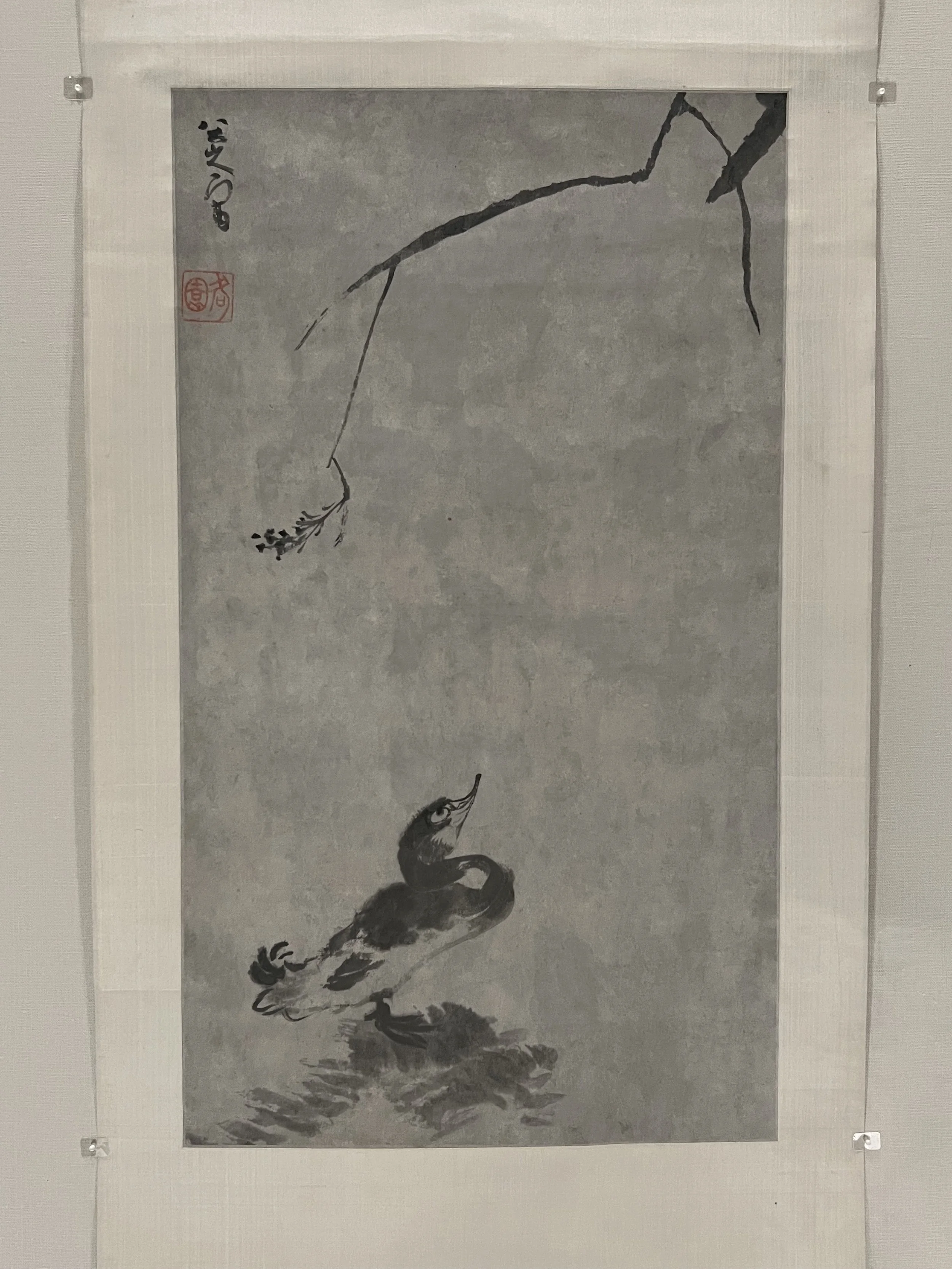
I had that experience with this painting in the Hong Kong Museum of Art by Zhu Da. I was absolutely floored by it.
Every stroke feels perfect. Each mark carries years of lived experience and wisdom within the practice of brush and ink on paper. None of the brushstrokes feel contrived or stylistic in a superficial way. They feel felt. They feel real. They feel true.
There is something deeply whimsical about this painting, yet also deeply sad. The signature itself carries that paradox. It resembles the characters 哭之笑之 (ku zhi xiao zhi), which roughly means crying and laughing at it. That phrase seems to hold the spirit of the work. There is despair intertwined with humor, a quiet recognition of the absurdity of existence. Perhaps one can feel pain deeply without necessarily suffering. The painting seems to hold that paradox.
The duck is gorgeous. Its face holds many emotions at once. I also love the line of the branch above. It reads both as branch and as a mountain-like form, two branches or perhaps one continuous gesture. Even within the melancholy of the scene, the blossoms bloom. Even in sadness there is renewal. Life continues. It is cyclical.
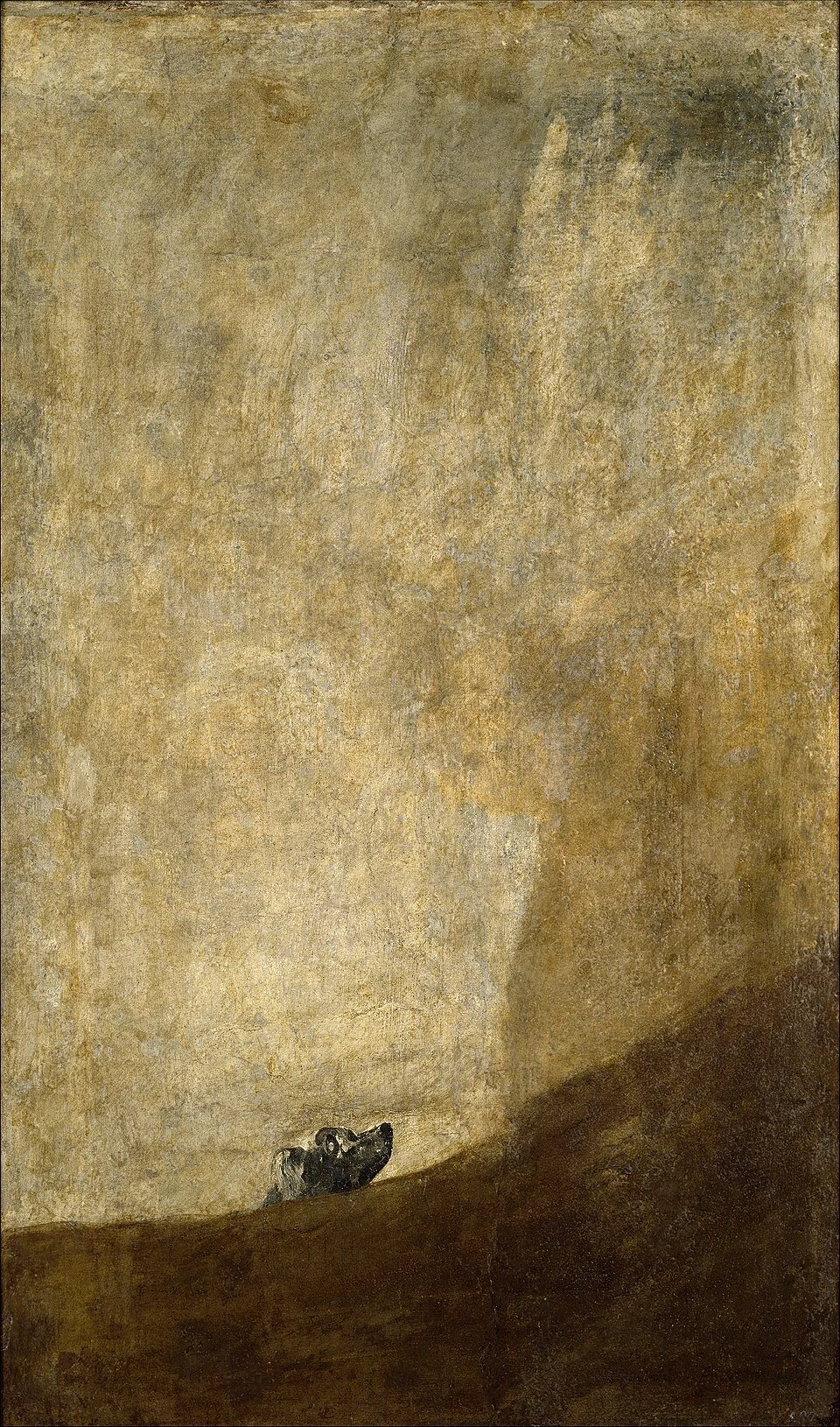
The painting also reminds me of that extraordinary image by Francisco Goya from the The Black Paintings series, the The Dog. There are surprising correspondences between the two works. Both figures sit low in the composition, looking upward into a vast space. Both evoke a quiet sadness and vulnerability, but also something more complex, perhaps even a form of surrender.
What also feels striking is that both of these figures exist in a kind of exile. Zhu Da was a descendant of the Ming imperial family who became a monk after the fall of the dynasty, while Goya too experienced a fall from favor after once being closely connected to the Spanish court. Both artists knew what it meant to move from proximity to power into a position of distance and isolation.
There is something humbling about that movement, about being close to power and then suddenly cast aside. Both paintings seem to hold that condition. These small animal figures become quiet stand-ins for the human condition, beings subject to forces much larger than themselves.
In both images the creature appears fragile within a vast surrounding space. The duck sits low beneath an immense wash of atmosphere. Goya’s dog emerges from a field of emptiness. In each case there is a huge spaciousness that makes the figure feel small within the greater elements of existence.
And yet there is also awareness in these figures. A knowingness. The duck’s upward glance carries something deeply human: a woundedness perhaps, but also attention and curiosity. The same can be felt in Goya’s dog. They seem aware of their position within the larger order of things.
What is so profound is how little is required to convey this. A few brushstrokes. A small form placed within an immense field. Through this economy both artists create a space where vulnerability, humility, and acceptance coexist.
There is sadness here, but it is not despair. It feels closer to a recognition of one’s place within the larger forces of life. And in that recognition there is something quietly peaceful.
What moves me most is the poetry of it. It is a painting I feel I could return to again and again.
Even the wash in Zhu Da’s painting is extraordinary. The subtle grey atmosphere feels alive. Every brushstroke carries a sensitivity and intelligence that I find deeply beautiful.
I am completely in love with this painting, it is perfect.